
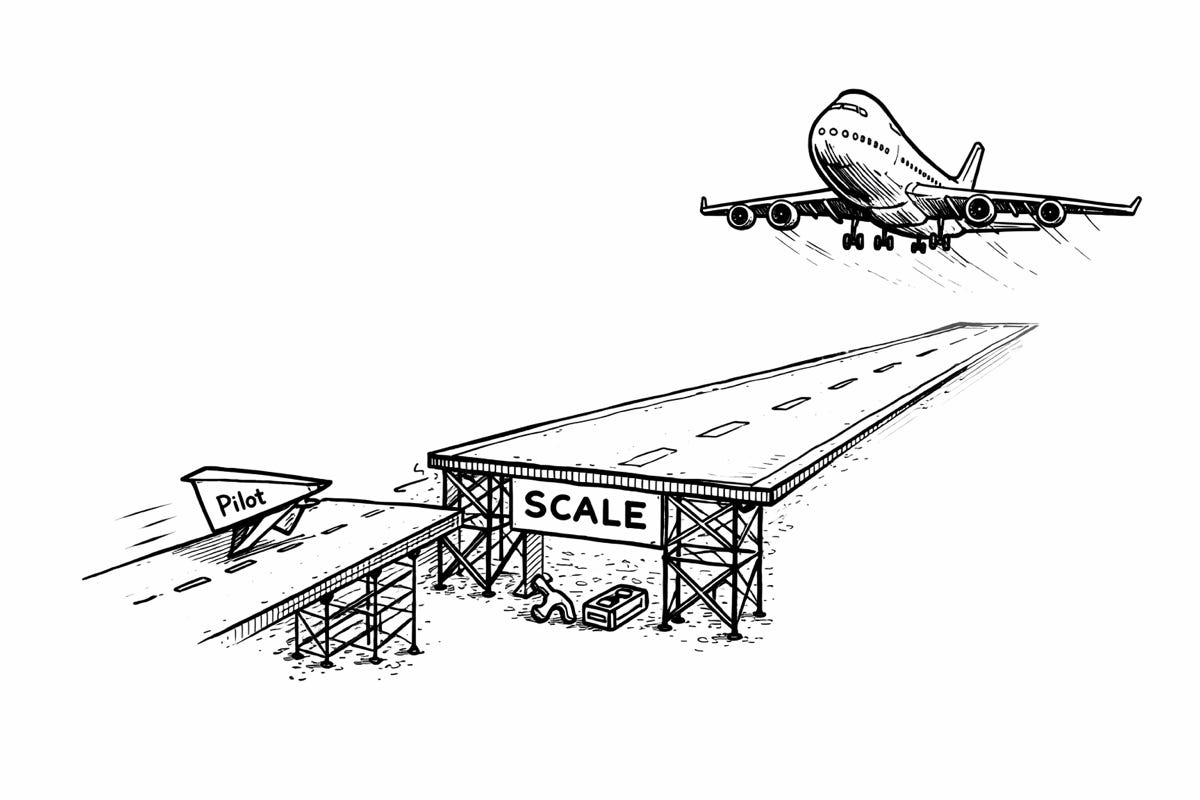
From Pilotland to Opschaalland
The plan is clear. The hard part is building.

The Netherlands is leaning back into investing in its future earnings capacity. Not as a luxury, but as a necessity. Geopolitical uncertainty is rising, competition is accelerating, and other countries are scaling strategic sectors with serious capital.
The 2026–2030 coalition agreement isn’t a detailed blueprint, but the direction is clear: use public capital as a lever to mobilize private and institutional capital, and strengthen the institutions needed to scale innovation.
What stands out:
Additional investment capacity and the use of guarantees/insurance-like instruments to share risk and unlock capital
A push towards a national investment institution with distance from day-to-day politics. This is an institutional upgrade if it delivers professional governance and continuity.
Digital sovereignty becomes explicit policy: reducing strategic dependencies (on cloud, data, and critical systems such as GPS), shaping procurement to allow more Dutch/European participation
Government IT capacity gets structural remedies, long overdue.
National Agency for Disruptive Innovation is positioned as a high-risk, high-impact vehicle with dedicated capital, potentially meaningful if it’s protected from bureaucracy with real decision rights. Please let this be driven by market, and not political forces.
Capital helps, but only when the system can execute. The real upgrade is execution capacity: accountable owners, short cycles, modular procurement, and kill switches that work. If the government builds like a learning system, with small bets, fast feedback, and clear incentives, then “opschaalland” becomes a capability.